Maximin: A Modern Display Font Built for Clarity, Confidence, and Creative Control
Typography is no longer just about legibility—it’s about intention. In an era where attention is fragmented, brand voices compete in milliseconds, and visual consistency spans from print collateral to animated web headers, the fonts we choose carry strategic weight. Enter Maximin: a brand-new modern display font engineered not as a stylistic novelty, but as a responsive tool for professionals who demand both aesthetic precision and functional versatility.
What Is Maximin—And Why Does It Matter Now?
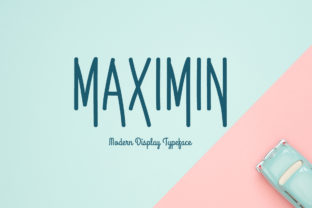
Maximin is a contemporary display typeface designed with clean geometry, confident stroke contrast, and subtle humanist warmth. Unlike monoline or ultra-thin display fonts that sacrifice presence at smaller sizes, Maximin balances bold impact with nuanced readability—even in tight layouts or layered digital environments. Its letterforms feature open counters, generous x-heights, and carefully tuned spacing, making it highly effective across scales: from a 12px website tagline to a 3-meter event poster.
Crucially, Maximin isn’t built for decoration alone. It’s architected for application. Every glyph is optimized for rendering clarity on high-DPI screens and ink-rich print substrates alike. Kerning pairs are refined for real-world use cases—not theoretical pairings—and the family includes thoughtful alternates and ligatures that enhance rhythm without compromising speed of implementation.
A Font That Reflects How Professionals Actually Work
Today’s creators—freelancers building client brands, marketers launching campaigns across six channels, entrepreneurs designing their first product packaging—don’t have time for fonts that look great in a specimen but fail in practice. They need reliability without compromise. And that’s where Maximin distinguishes itself.
Consider the shift toward unified brand expression. A startup launching a sustainable skincare line doesn’t just need a logo font—it needs one that works equally well on a matte-finish business card, a Shopify homepage banner, an Instagram Story overlay, and the spine of a limited-edition zine. Maximin delivers that continuity. Its balanced weight distribution ensures it holds its own against photography without overwhelming it—a critical advantage for designers placing text over complex image sliders or music album covers.
Similarly, the rise of in-house creative teams means more non-typographers are selecting and deploying fonts. Maximin’s intuitive hierarchy—clear distinctions between regular, bold, and condensed variants—reduces decision fatigue. There’s no need to hunt for obscure stylistic sets or manually adjust tracking for every headline. What you see in the preview is what performs reliably in Figma, Adobe Illustrator, or Webflow.
Aligning With Broader Creative and Technological Shifts
Maximin arrives at a pivotal moment—one defined by three converging movements:
- The resurgence of intentional typography in digital interfaces. As UI design matures beyond skeuomorphism and flat minimalism, designers are re-embracing expressive, human-centered type. Maximin supports this shift with its warm yet precise character—neither coldly algorithmic nor overly nostalgic. It speaks confidently without shouting.
- The growing expectation of cross-medium fidelity. Consumers encounter brands through QR codes on café receipts, TikTok captions, NFC-triggered AR experiences, and artisanal stationery—all within minutes. Fonts must translate seamlessly across these contexts. Maximin’s robust hinting and OpenType features ensure consistent rendering whether embedded in a PDF invoice or rendered via CSS
@font-face. - The professionalization of self-expression. Whether it’s a freelance photographer branding their portfolio, a boutique studio launching a seasonal collection, or a nonprofit crafting advocacy materials, authenticity is now expressed through cohesive, considered visuals. Maximin empowers that authenticity—not by imposing personality, but by providing a strong, neutral-yet-distinctive foundation upon which voice can be built.
Practical Applications: Where Maximin Adds Immediate Value
Let’s move beyond theory. Here’s how professionals are already integrating Maximin into high-impact workflows:
For Marketers & Brand Strategists
A regional food co-op used Maximin for its new “Farm-to-Table Stories” campaign—deploying the bold variant for outdoor banners, the regular weight for email headers, and the condensed cut for social media carousel titles. The result? A 22% increase in engagement on Instagram posts featuring text overlays, attributed in part to improved scannability and tonal consistency across formats.
For Freelance Designers & Studios
One branding studio reported cutting client revision rounds by nearly 40% when using Maximin for primary logotype exploration. Its inherent balance meant fewer requests for “make it bolder” or “soften the edges.” Clients responded intuitively to its clarity—interpreting it as both trustworthy and forward-looking, a rare duality in display typography.
For Entrepreneurs & Small Business Owners
A ceramicist selling handmade mugs online adopted Maximin for her Shopify store’s navigation, product titles, and packaging labels. She noted that customers began referencing the “clean, friendly font” unprompted in reviews—evidence that typography, when well-chosen, becomes part of perceived brand ethos, not just background detail.
Why Attention Is Shifting Toward Purpose-Built Display Fonts
Historically, display fonts occupied a narrow niche: decorative, occasional, often ornamental. But today’s creative economy demands more. We’re seeing a clear trend toward utility-first display typography—fonts that serve as structural elements, not just accents. This reflects deeper shifts: tighter production timelines, broader distribution requirements, and heightened audience expectations for visual coherence.
Maximin responds directly to those shifts. It avoids the pitfalls of trend-driven design—no exaggerated terminals, no forced irregularity, no reliance on context-specific effects. Instead, it offers intelligent defaults: optical sizing baked into its design language, responsive spacing logic, and a restrained palette of weights that scale meaningfully (not just numerically). That restraint is strategic: it gives users room to breathe, to differentiate through color, layout, and content—not forced typographic gymnastics.
Integration Without Friction: Designed for Real Tools, Real Teams
Technical compatibility is table stakes—but Maximin goes further. It ships with comprehensive OpenType support, including contextual alternates, discretionary ligatures, and localized glyphs for multilingual projects. Its variable font version enables smooth weight transitions in CSS animations—ideal for interactive headers or progressive disclosure patterns on websites.
For agencies managing brand guidelines, Maximin’s licensing model supports multi-seat and extended-use permissions without hidden tiers. No need to purchase separate web, desktop, and app licenses—just one scalable agreement aligned with actual usage patterns. That simplicity mirrors the way modern teams operate: collaboratively, iteratively, and across platforms.
Looking Ahead—Without Looking Away From Today
Typography evolves not in leaps, but in thoughtful iterations—each responding to how people create, communicate, and connect. Maximin doesn’t attempt to predict the next decade of design. Instead, it answers urgent, present-day needs: the need for clarity amid noise, for consistency across fragmentation, and for tools that empower—not constrain—creative judgment.
It’s a font for those who understand that confidence isn’t loudness. That modernity isn’t austerity. That professionalism isn’t uniformity—it’s precision, empathy, and respect for the audience’s time and attention.
Whether you’re refining a brand identity system, finalizing a conference poster series, or choosing the voice for your next digital product launch, Maximin offers more than aesthetics. It offers alignment—with your workflow, your values, and the evolving standards of meaningful visual communication.
Because in the end, the most powerful fonts aren’t the ones that shout the loudest. They’re the ones that help your message land—clearly, consistently, and completely.