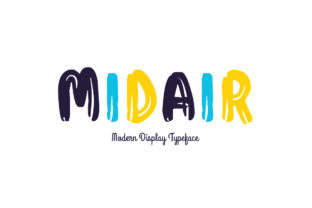
Midair: A Versatile Display Font for Modern Design Workflows
Midair is a fresh and dynamic display font designed to elevate visual communication across a wide range of applications. Whether you're working on stationery, logos, t-shirts, or website headers, Midair offers a clean, modern aesthetic that can enhance your creative projects. Its versatility makes it an ideal choice for designers, marketers, and creators looking to add a touch of sophistication to their work.
As part of a broader design process, Midair fits seamlessly into both digital and print workflows. It can be used at various stages—whether you're brainstorming ideas, refining a concept, or finalizing a project. The font's balanced structure and elegant curves make it suitable for both bold headlines and subtle accents, allowing for flexibility in how it's applied.
Understanding Midair in the Design Process
When integrating Midair into your workflow, it's important to consider how it interacts with other design elements. For instance, when creating a logo, Midair can serve as the primary typeface, offering a strong visual presence while maintaining readability. In print design, such as flyers or posters, it can act as a headline font, drawing attention without overwhelming the viewer.
Midair also works well in conjunction with other fonts. Pairing it with a sans-serif or serif typeface can create a harmonious balance between contrast and cohesion. This approach is especially useful in branding, where consistency across different mediums is crucial. By strategically combining Midair with complementary fonts, you can maintain a professional look while adding visual interest.
Midair in Different Project Phases
Before starting a project, Midair can help set the tone. When planning a marketing campaign, for example, selecting a font like Midair early on ensures that all design assets align with the chosen style. This proactive approach saves time later, as it reduces the need for revisions based on inconsistent typography.
During the execution phase, Midair’s clarity and adaptability make it easy to implement. Whether you're designing a website header or a social media graphic, the font maintains its visual impact across different formats. Its legibility at various sizes ensures that it remains effective whether used in large-scale prints or small digital interfaces.
After completing a project, Midair can contribute to quality control. By using the same font consistently across all deliverables, you reinforce brand identity and ensure a polished appearance. This attention to detail can make a significant difference in how your work is perceived by clients or audiences.
Practical Implementation Tips
To get the most out of Midair, consider the following practical tips:
- Test the font in different contexts: Before finalizing a design, test Midair in various environments—such as web, print, and mobile—to ensure it performs well across all platforms.
- Use it selectively: While Midair is versatile, it’s best suited for headlines and key visual elements. Avoid overusing it in body text, as this can reduce readability.
- Pair it with complementary styles: Combine Midair with simpler fonts to create a layered design that feels cohesive yet dynamic.
- Check for compatibility: Ensure that the font is available on all devices and platforms where your work will be viewed or printed.
These steps help maintain efficiency and consistency, ensuring that Midair enhances rather than complicates your workflow.
Midair and Workflow Integration
Integrating Midair into your existing tools and processes can streamline your design efforts. If you use design software like Adobe Illustrator, Photoshop, or Figma, Midair can be easily imported and applied to your projects. This compatibility allows for smooth transitions between different design phases without disrupting your workflow.
For teams working on collaborative projects, using Midair consistently ensures that everyone adheres to a unified visual language. This is particularly beneficial in branding or content creation, where uniformity is key. By establishing a shared font library, team members can access and apply Midair effortlessly, reducing confusion and improving productivity.
Real-World Use Cases
Midair’s adaptability makes it suitable for a variety of real-world scenarios. Here are a few examples:
- Logos and Branding: Midair can be used as the main font for a company logo, providing a modern and memorable visual identity.
- Print Materials: From business cards to brochures, Midair adds a professional touch to printed documents, making them more visually engaging.
- Website Headers: On websites, Midair can highlight key sections, guiding users through content while maintaining a clean layout.
- Marketing Campaigns: Whether for social media posts or email newsletters, Midair helps create eye-catching visuals that stand out.
- Personal Projects: Hobbyists and creatives can use Midair to enhance personal projects, such as photo frames or handmade cards, adding a touch of elegance.
Each of these applications demonstrates how Midair can be tailored to meet specific needs, making it a valuable addition to any designer’s toolkit.
Long-Term Use and Maintenance
Over time, maintaining consistency with Midair becomes essential, especially in ongoing projects or long-term branding efforts. Regularly reviewing how the font is used across different materials ensures that it continues to reflect the intended message and style.
Additionally, staying updated with font versions and platform support can prevent issues related to rendering or accessibility. By keeping track of these factors, you can ensure that Midair remains a reliable and effective tool in your design process.
Conclusion
Midair is more than just a font—it’s a strategic element that can enhance the visual appeal and professionalism of your work. By understanding how it integrates into different workflows, you can leverage its strengths to create impactful designs across multiple mediums. Whether you're a designer, marketer, or creative professional, Midair offers a flexible and stylish solution for modern design challenges. With thoughtful implementation, it can become a cornerstone of your visual identity, supporting both short-term projects and long-term goals.