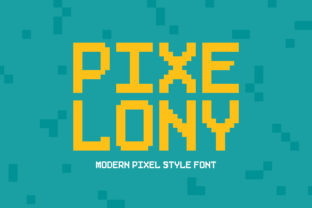
Pixelony: A Modern, Minimalist Pixel Style Font for Designers
The Pixelony font is a unique typeface that stands out in the world of digital typography. Designed with a pixel style, it offers a clean and modern aesthetic that appeals to designers, developers, and creatives looking for a distinctive visual identity. Unlike many other fonts that vary in size and shape, Pixelony features all caps letters, each precisely sized at 8x11 pixels. This uniformity gives the font a consistent look that can be especially effective in low-resolution or retro-themed projects.
One of the most notable characteristics of Pixelony is its minimalist approach. The font's design avoids unnecessary details, focusing instead on clarity and simplicity. This makes it ideal for applications where readability is essential, such as user interfaces, game design, or any project that requires a clear visual hierarchy. Its pixelated style also lends itself well to retro gaming aesthetics, making it a popular choice among indie developers and artists who want to evoke a nostalgic feel.
What Makes Pixelony Distinct?
Pixelony's defining feature is its fixed letter size. Each character, whether it's an 'A' or a 'Z', occupies the same space—8 pixels wide by 11 pixels tall. This consistency ensures that text written in Pixelony maintains a uniform appearance, which can be particularly useful when working with limited screen space or grid-based layouts. It also helps maintain a cohesive look across different platforms and devices, as the font does not rely on varying widths to convey meaning or style.
Another key aspect of Pixelony is its all-caps format. By using only uppercase letters, the font eliminates the need for lowercase variations, which simplifies the design and reduces the overall file size. This makes it a practical choice for projects where performance and efficiency are important. Additionally, the lack of lowercase letters can create a more bold and impactful visual presence, which may be desirable in certain design contexts.
The pixel-style design of Pixelony is reminiscent of early computer graphics and video games. This aesthetic has seen a resurgence in recent years, particularly in the realm of web design, mobile apps, and digital art. For creators looking to incorporate a retro or vintage feel into their work, Pixelony offers a reliable and recognizable option that can seamlessly integrate into various design ecosystems.
How Pixelony Compares to Similar Fonts
When comparing Pixelony to other pixel-style fonts, it’s important to consider both its strengths and limitations. Many similar fonts, such as PixelMplus or Droid Sans Mono, offer a range of styles, including lowercase letters, different weights, and alternative glyphs. These variations can provide greater flexibility for designers who need a more versatile typeface. However, Pixelony’s focus on all-caps and fixed-size characters sets it apart in terms of consistency and simplicity.
Fonts like Press Start 2P or Nerd Font also have a pixelated look but often include additional symbols and special characters, making them more suitable for coding environments or terminal interfaces. While these fonts may offer more functionality in specific use cases, they can sometimes appear cluttered or less refined compared to Pixelony’s clean and minimal approach.
In contrast, some modern sans-serif fonts, such as Roboto or Open Sans, prioritize readability and versatility across a wide range of sizes and formats. These fonts are excellent for general use but lack the distinct visual identity that Pixelony provides. For designers seeking a more unique or thematic typeface, Pixelony offers a compelling alternative that can add personality and style to a project.
Best Fit Situations for Pixelony
Pixelony is particularly well-suited for projects that benefit from a retro or pixelated aesthetic. Game developers, for example, may find it useful for creating UI elements, menus, or in-game text that aligns with the visual style of classic arcade games. Its fixed-size letters make it easy to implement in grid-based layouts, ensuring that text remains aligned and visually consistent across different screens and resolutions.
Web designers and app developers who want to incorporate a nostalgic or minimalist theme may also find Pixelony to be a valuable resource. Whether used for headings, buttons, or decorative elements, the font can add a distinctive touch without overwhelming the overall design. Its simplicity also makes it a good choice for projects that require high readability, such as signage, infographics, or educational materials.
For creators working with limited resources or constrained design systems, Pixelony’s straightforward structure can be a significant advantage. Its small file size and lack of complex glyphs reduce the burden on performance, making it an efficient option for projects where speed and reliability are critical. This makes it a practical choice for mobile apps, embedded systems, or other environments where efficiency is a priority.
Limitations and Tradeoffs
Despite its strengths, Pixelony is not without its limitations. One of the main drawbacks is its lack of lowercase letters, which can be a barrier for users who require a more traditional typographic experience. In situations where a mix of uppercase and lowercase text is necessary, such as in body copy or formal documents, Pixelony may not be the best choice. Designers should consider this limitation when deciding whether to use the font in a given project.
Another potential tradeoff is the font’s fixed-size structure. While this ensures consistency, it can also limit the ability to scale text effectively. In some cases, this may result in text that appears too small or too large depending on the context. Designers should test the font in different scenarios to ensure that it meets their specific needs and expectations.
Additionally, because Pixelony is a niche font, it may not be as widely supported as more mainstream typefaces. This can lead to compatibility issues when using the font across different platforms or software. Users should verify that the font is available and properly rendered in their intended environment before relying on it for critical projects.
When to Choose Pixelony Over Alternatives
Pixelony is a strong choice for projects that require a consistent, pixel-style aesthetic. If the goal is to create a retro feel or to emphasize a minimalist design, Pixelony can be an excellent fit. Its uniform letter size and all-caps format make it ideal for applications where visual clarity and simplicity are paramount.
However, for projects that demand more typographic flexibility, such as long-form text, multilingual support, or complex layouts, alternative fonts may be more appropriate. In these cases, designers should consider options that offer a broader range of features while still maintaining a similar visual style. By evaluating the specific requirements of a project, users can determine whether Pixelony is the right choice or if another font would better suit their needs.
Ultimately, Pixelony offers a unique and practical solution for designers looking to incorporate a pixelated, minimalist style into their work. Its simplicity, consistency, and retro aesthetic make it a valuable tool in the right context, though it may not be the best fit for every project. By understanding its strengths and limitations, users can make informed decisions about when and how to use this distinctive font.